Archive for July, 2010

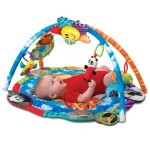
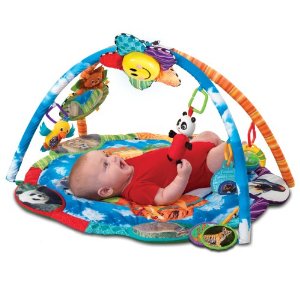
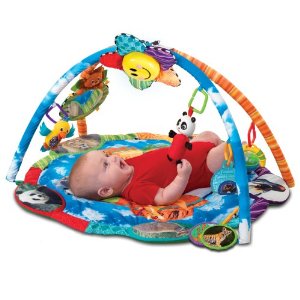
Play gyms, activity gyms, play nests – these words all relate to one item, that is a firm favourite with babies from newborn up to about 12 months.

These play gyms and activity nests mostly come in the form of comfortable, quilted or softly padded playmats, sometimes raised at the edges with a space in the middle for baby (like a ring doughnut).

And these play gyms can be either brightly coloured or in soft, pastel shades. But don’t be fooled by thinking they are just snug and comfy resting places for babies to fall asleep in!

These activity gyms provide a plethora of visual and audio, a well as tactile stimulation for helping to develop young inquisitive minds. You can read more about the stages of cognitive development here.

Often decorated with well known and lovable characters, Winnie-the-Pooh, Tigger, Eyore, or farm and zoo animals as well, they can consist of detachable, hanging parts that small babies can try to grasp. They tend to have parts that are crinkly, soft, scrunchy textures for baby to touch, squeeze and stroke.

Some come with bright twinkling lights and bells and others make funny sounds, or musical sounds, and some even do both.

You will often find mirrors attached to these activity gyms, so that your baby gets to find and see its own reflection, often providing hours of fun for babies and carers alike. All of this is extremely important for developing young minds. Babies are like a sponge, they are ready to absorb whatever information they can and boy – they can’t grasp it fast enough!

A lot of new research points to the first three years of life as being critical to a baby’s developing brain. It is a known fact that during this period, not only does the brain triple in weight but it also establishes thousands of billions of nerve connections. Astonishingly, at the age of three, a young child has twice as many nerve connections as many adults.

Therefore, in your role as a parent, or primary care giver, it is of paramount importance that you recognize this and understand just how much development is taking place inside your young baby’s brain from birth until the age of three.

At birth, children have most of the neurons (brain cells) they need for a lifetime however, these brain cells are not yet linked (or “wired”) together to form the complex networks that are required for mature thought processes to take place. And what happens is that in the early years, young children’s brain cells form these connections, or synapses as they are commonly called, very very rapidly.

One of the crucial ingredients to aiding these connections to form, is experience, and repetition. In a word, the more times you repeat something new, like showing a baby how to scrunch up a ball, the quicker these connections are formed.

Therefore, it naturally follows that the more positive interaction you give an infant or toddler, the more you are helping to stimulate young brains.  Baby mobiles are also great for keeping babies stimulated and interested since they emit noises and often have motion too.

This stimulation causes new connections to form neural pathways and strengthens existing ones.
Playing with activity gyms, with all the bells and whistles that they offer or reading to a child, anything which allows a child to have positive, interactive experience, will aid your child’s brain development.

Although activity gyms can be used from 0 to 12 months or more, it is usually at around the 4 month mark, that your baby will start to gain more than just a passive interest in it.

This is because, babies will now start to play with objects (as opposed to just staring at them or the environment around them). Your baby is starting to gain growing control of his body as well as beginning to gain hand to eye co-ordination and increasing perception of the environment around them. So you can watch as your baby begins to enjoy objects by means of rather unco-ordinated handling and mouthing of them.

Later, at about 5 to 6 months, your baby’s relatively well-controlled ability to reach and grasp objects increases her interest in them.

Although your baby may explore them by means of mouthing and handling them, you will find that she starts to shake and bang them as well. This is also the beginning of her understanding of cause and effect, that is, that banging or shaking an object will cause a noise.

By around the 6th or 7th month, your baby’s hands and eyes are working together quite well now so that looking now also becomes part of the exploration process, as well as mouthing and handling, and her interest in toys and other objects is intense. Your baby’s ability to grasp and manipulate objects is developing brilliantly. Her fingers close on an object with decision, and she can lift one hand towards a toy, and bang two objects together. Do not underestimate the importance of these achievements. Reaching to grasp an object involves three joints in the arm and fourteen in the hand.

Initiating a reaching movement involves more than thirteen muscles in the arm and adjusting the hand to grasp an object use more than twenty in the hand.

So, as you lovingly sit and watch your young baby laughing and gurgling on the play mat or under the activity gym – do not underestimate the power of the changes taking place in the brain, all enriching an inquisitive mind and arming it with a plethora of knowledge and understanding.

Technorati Tags: activity gyms for kids, baby activity gyms, baby play gyms, fisher price play gym, how long do babies play on play gyms, vtech play gym, when do babies get interested in play gyms

A baby’s only activities until the age of two months are sleeping and eating. He is not interested in anything else.
After two months, the baby starts being more curious about the world around him. At first, he just watches the activity in the room.

At the age of 4-5 months, he is already moving his arms and legs with a lot of energy.

At this point, as a parent you should stimulate the baby to continue this rhythm. The best way to do this is through play. And since play is unconceivable without toys, you should consider getting some for your baby.
Research conduced in the last few years revealed that babies too can have an assortment of toys. Babies respond to sight, sound and touch. Toys that stimulate these senses can help your baby learn about the world around him, how things work and so on.

To help you find best toy for your baby, I’ve made here two age groups, birth to 6 months and 6 to 12 months. The difference between these age groups is huge because a baby grows very fast and so his needs differ from month to month.

Toys for babies of one to six months:
In this period, a baby isn’t very active. He is mostly sleeping. When the baby is awake, he does not seem to be interested in anything else but eating and crying.

At the age of two months, the baby starts following every activity in the room. He is able to focus his vision on an object for a few moments. This is when you must introduce the baby in the world of toys, if you haven’t already done so. Use black and white and high contrasting color toys. The baby can’t play at this age because he can’t make complex moves like grabbing, or turning around.

At the age of four months, the baby is already moving his arms and legs. He has more energy than ever, and he is eager to use it. He is able to grab things and crawl. In this situation, a new activity is making room in his life: play. Although it is very rudimentary, play is very important for the baby’s development.

Here are some ideal gifts for newborns:

  • Juggling toys
  • Animal shaped toys made of rubber
  • Little mirrors that can’t injure the baby
  • Toys made specially for chewing
  • Little colored circles bound together

Be a bit more careful with musical toys. Buy musical toys for your baby only after you have checked that the sounds they produce aren’t very powerful. Musical toys that produce sharp noises are dangerous because babies tend to get the sound source close to their ear, which, being fragile can be affected.
To read the whole article, visit http://www.child-toys-guide.com/baby-toys.shtml

You might also like to read:

Different stages of play

Play and Learn Activities

Technorati Tags: Baby Toys, brain stimulating baby toys, musical baby toys, newborn baby toys ideas, toys for newborn babies

Tearaway toddlers who can’t sit still need a wider range of more challenging toys.

As he approaches his first birthday, your little baby now crosses the line into the exciting world of toddlers. They become increasingly independent and their hand-eye coordination has increased considerably rendering more control over their environment and any objects therein. Toddler’s toys therefore, become more complex, items such as puzzles, wooden shapes to fit into boards and more building and stacking toys as well. In short, anything that will keep toddler hands busy and toddler minds active!

Toddlers will be entranced and absorbed by toys that come apart and then need to be reassembled again.
Small jigsaw puzzles, of maybe 2-4 parts, wooden blocks that can be stacked and unstacked, and shape sorters are ideal toys for toddlers. Be aware though that the more complex shapes might still prove to be quite a challenge for their ever inquisitive and fascinated minds.

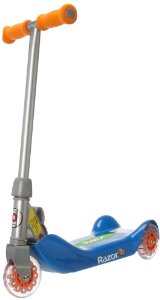
For outdoor toys that will help your toddler to get a feel for balance, for instance when learning to ride a bike, you may want to take a look at the Strider PREBike for Toddlers or the Mini Kick Scooter. Both are excellent, high-quality outdoor toys for toddlers.

You can browse online and sort by brand, by age even by type of toy – it all makes for an easy, simple, comfortable shopping experience.

Technorati Tags: balance bikes for toddlers, jigsaw puzzles, outside toys for toddlers, pre school toddler toys, Toddler Toys, wooden shapes

Welcome to the world of the PSP, Nintendo DS, radio controlled cars and Spiderman clocks……..

Toys for small kids and big kids too! Do you want to play with Playstation, Nintendo Gamecube, Nintendo DS or the Xbox even? We have a huge range of video games to choose from. All the latest titles galore and at reasonable prices.
Or, for something a bit more traditional, check out our wide selection of radio controlled toys and gadgets including cars, planes and trains. Spend hours of fun with your child, indoor or outdoor. Some of the planes can even be flown inside the house!
Shop online for electronic toys and have hours of fun away from the bustling crowds
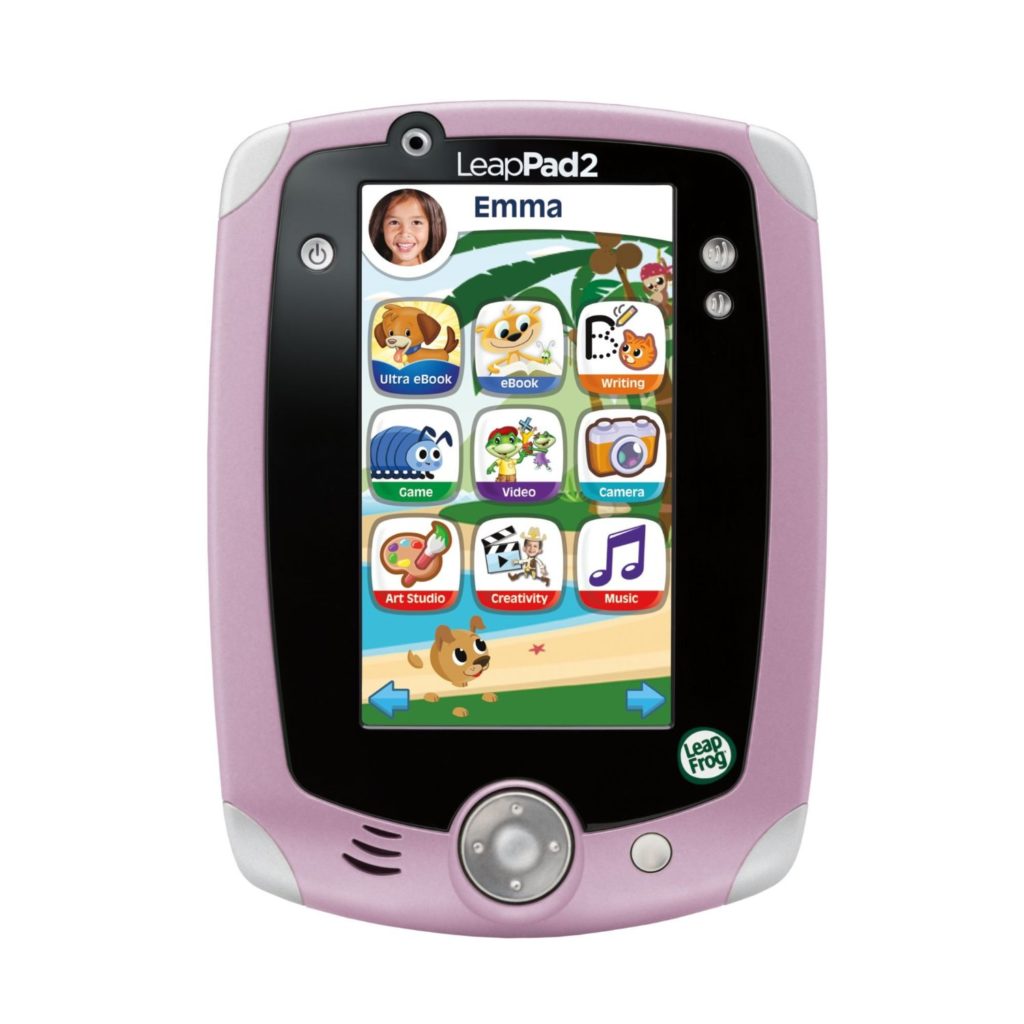
There are electronic toys for babies and toddlers as well – Discovery Balls and books from Leapfrog, a Little People Discovery Village from Fisher Price and even a Discovery Space Shuttle from LEGO. Now there are some fabulous educational learning toys from those innovative people at LeapFrog. The LittleTouch “LeapPad” Learning System is a remarkable educational electronic toy for 6-36 month olds. It encourages early language development and comes
with 3 levels to grow with your child. Browse online and see for yourself.

Technorati Tags: electronic toys, nintendo ds, nintendo gamecube, playstation, rc cars, xbox

Your budding geniusLights, bells, whistles – educational toys come in so many quises!
These days so many of the top brands offer a fantastic selection of educational toys – brands such as Lego, vTech, Brio, LeapFrog and Fisher Price.

There are electronic books that help your child to enunciate letters and words, books that help them to read and write, furry toys that read stories, interactive Globes to help your child explore other continents and to discover about animals.

There is so much to learn about the big wide world and educational games making learning seem like child’s play and therefore lots of fun.

The learning system toys are aimed at many age ranges, some from birth to about 3 years, with the next stage up being from about 4 to 8 years.

The trend these days in educational toys for children is to have less of the passive learning and hence as a result, the toy manufacturers are increasingly leaning towards, and producing, multimedia learning systems.

LeapFrog, an innovative toys manufacturer is just one of the leading brands that is producing some excellent learning systems for young minds; Vtech, Fisher Price are some others that are doing the same.

These learning systems all aim for the same thing, namely, to enable children to read electronic books, watch interactive videos, play action packed learning games.

The emphasis is very much on interactive learning, but more importantly, learning through play and fun – so that a child almost forgets he is learning by rote.

Technorati Tags: brio learning toys, fisher price educational toys, leapfrog learning toys, vtech educational toys

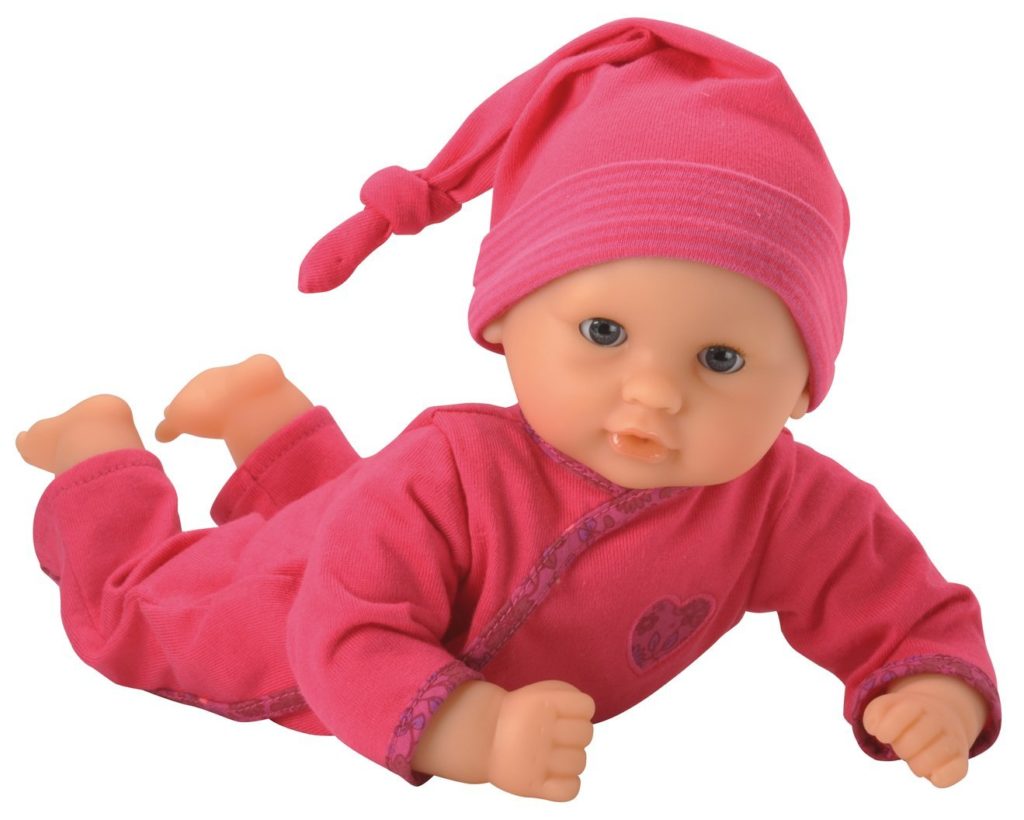
The exciting world of Barbie, Bratz, Baby Corolle dolls,  and Cabbage Patch dolls as seen through your child’s eyes.
There are no limits to your child’s imagination and playing with dolls, baby dolls, princess dolls, rag dolls (the list is endless) helps your child to role play and create magical worlds inhabited by princesses and heroines who live in castles and are rescued by princes on horseback!

Join the enchanted world of Barbie and her Double Carriage with horses, or Barbie and her Enchanted Castle. And now there is the Barbie Fairytopia – Elina Doll with Magical Light-Up Wings! Taken from the Fairytopia DVD movie, Elina is a beautiful fairy who has no wings – your child will be entranced by her no less..
Bratz Dolls, on the other hand, are the hippest, most coolest, ultra trendy babes in town! Bratz dolls have fantastic fashion sense, they look ultra trendy, have great makeup and accessories and drive the cutest cars! All girls want to be just like them!
As well as Barbie and Bratz, we also have Cabbage Patch dolls and baby dolls, such as Baby Annabell and Nicole.

We have ethnic dolls, such as Baby Stella with Black hair, the Monster High fashion dolls, Dora the Explorer dolls, princess dolls, favourite character dolls, walking and talking dolls, rag dolls, soft dolls, toddler dolls and much, much more!
As well as a varied selection of dolls, you can easily browse online to find doll accessories such as doll clothing, playsets, horses, tea and dinner sets and dolls houses too.

Technorati Tags: baby anabel, baby annabell dolls, barbie dolls, bratz dolls, Dolls, fashion dolls

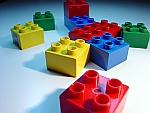
Lego play sets, Meccano, Clickits and good old fashioned wooden building blocks for kids – all open your child’s mind to building.

Children love to build things. From an early age, they will take whatever is available and begin stacking.

Making houses, forts, castles, and whatever else their imagination conjures up can keep children occupied for hours. And important skills are learned through playing with construction toys. These include hand-eye coordination, logical thinking, and bringing a creative idea to fruition.

The toy industry has embraced this childhood activity by producing a full line of building blocks and construction toys.

There are now dozens of choices for children who want to enjoy construction toys. From simple alphabet blocks to Scrap Metal Sculptures, kids have a wide range from which to choose. Here are some of the top sellers:

Lego: What began as simple interlocking bricks has turned into an entire industry. According to the Lego Company, children spend over 5 billion hours a year playing with Lego bricks. Lego comes in a variety of sizes (big ones for little hands and little ones for big hands) and specialized Lego kits make up a large potion of their product line.

Gearbotics: Kids can make their own robots with Gearbotics. Kits include claw arms, wheels, motors, and lots more, and the company makes things kid-friendly by color coding all of their parts.

K’Nex: This company bills itself as the maker of the world’s most creative construction toy. Knex sells a variety of kits, from deluxe bridge building to simple levers and pulleys.
Ello: Launched specifically for the female market, Ello allows girls to “create anything they can imagine.” Girls can design houses, towns, and even a water world from colorful pieces that snap together. Ello creations can be decorated after they are built.

Rok Works: Rockenbok takes the basic construction set and adds a new twist by integrating radio-controlled vehicles. Kids can create roads that will carry the vehicles and garages to house them.

Zome Systems: Zome is based on mathematical and molecular models and it is frequently used in classrooms to teach algebra, geometry, and more. Although it can be used as a teaching tool, Zome is also a lot of fun. For example, kids can create 3-D shapes, and then dip them into bubble mix to create truly crazy bubbles.

Mega Bloks: Similar to Lego, these blocks can be used to create everything from action figures to street racers. Like most toys in the construction category, Mega Blocks offers different product lines for younger and older children.

Whatever your choice, parents can’t go wrong with construction toys. From simple blocks to complicated architectural designs, construction toys show children that they can learn while having fun. On a frantic afternoon, remember to pull out the construction toys and watch as kids quiet down and start constructing things that they have plucked from their imaginations.

Some of the first building sets to enter the marketplace were Tinkertoys, the Erector Set, and Lincoln Logs. Tinkertoys were introduced at the American Toy Fair in 1913, and were an instant sensation.

Children took the thin rails and round spools and created engineering masterpieces. The Erector Set was created by A.C. Gilbert. He began selling his “Mysto Erector Structural Steel Builder” the same year that Tinkertoys hit the market. It quickly became the toy of choice for young architects across America, as they set about taking the metal beams and building skyscrapers and bridges.

Lincoln Logs followed shortly thereafter. Wide-eyed children found them under their Christmas trees in 1916, and the interlocking logs became part of history.

Each of these original construction toys has been updated and modernized to include hard plastic parts and brightly-colored pieces. They have proven to be as popular with this generation as they were with previous ones.

Technorati Tags: construction toys for kids, knex, lego, lego building blocks, meccano, wooden building blocks

Toys for babies are more than just play items. They can have the potential to develop your baby’s continuously growing mind and to stimulate your baby’s senses.

The first months and years of a baby’s life are a very important time as they lay the foundation for helping your baby realize his or her full potential.

Toys to stimulate and enhance your baby’s senses and emotional development

Play gyms, activity gyms, play nests – these words all relate to one item, that is a firm favourite with babies from newborn up to about 12 months.
Often decorated with well known and lovable characters, Winnie-the-Pooh, tigger, Eyore, zoo animals, etc – they can consist of detachable, hanging parts such as animals, or other characters, some come with bright twinkling lights and bells and other make funny sounds, or musical sounds, and some even do both.

Baby mobiles are a a much loved toy and perfect to keep little ones entertained as they lie in their crib.

Seek out toys that feed your baby’s curiosity, toys to excite your baby’s senses and toys that stimulate your baby’s sight and hearing.

On many baby toys you often find mirrors attached somewhere – this is so that baby gets to find
and see its own reflection, and crinkly, soft, scrunchy textures for baby to touch, squeeze and
stroke. All of this is extremely important for developing young minds.

Babies are like a sponge, they are ready to absorb whatever information they can – and boy – they can’t grasp it fast enough!
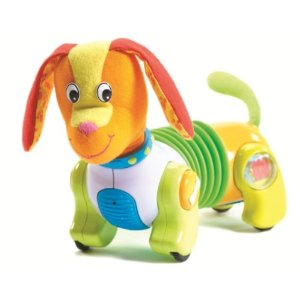
We have sought out some of the finest in developmental toys, and just plain toys for fun too, from high calibre brands such as Fisher Price, Tiny Love, vTech and Brio.

Technorati Tags: Baby Toys, fisher price, learning toys, sensory toys, vtech toys

Looking for action heroes? We’ve got Spiderman, Superman, Xmen and much much more!
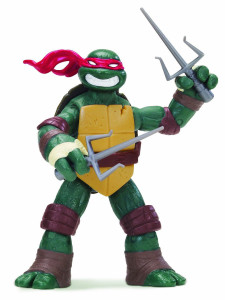
All children look up to action heroes – and most children want to be just like them! From the fantasy super worlds that action heroes such as Spiderman and Superman, amongst others, inhabit, we are quite sure you will find whatever you are looking for. Who can forget the awesome powers possessed by the Xmen? Or the Incredible Hulk? To little eyes and ears, these action figures are something to be marvelled at.

Those amazing superheroes, Spiderman and the Xmen, saving the world yet again! Kids everywhere want to be just like them – we have a range of superheroes based on their classic comic book adventures.
Action heroes make excellent toys for kids because they transport your child to that magical place where there are no limits to their imagination. They can pretend to have amazing powers just like Spiderman who can spin webs and scale walls! Or Superman who can fly at the speed of light and save the world! Or be like Batman with his handy gadgets that help the crusade for the good against evil.
Collectors of Marvel legends will also find kids toys that suit their taste.

Technorati Tags: hulk, incredible hulk, spiderman, superman, transformers, xmen

Adorable stuffed dogs are a favorite gift for dog lovers. Learn what to look for and what to avoid.
Although it’s hard to say when the first stuffed dogs appeared, I would guess that it was soon after dogs were domesticated. We do know that as long as there have been children, there have been dolls, rattles, miniature weapons, and hand-made animals. Anthropologists have found evidence of toys dating back to the earliest records of human life.

Play is universal and cross-cultural. Though it may vary among cultures and generations, it’s clearly instinctive and a key part of our development. A child’s play is his way of learning about himself and his world. Play opens the door to a child’s imagination. Some of our fondest memories from childhood are recollections of time spent playing with special people and favorite toys.

The Teddy Bear – A Timeless, Classic Toy

A classic among childhood toys is the Teddy Bear, who made his appearance in 1903 and is still popular today. Although the Teddy Bear may be famous because of his political affiliation (he was named after Theodore Roosevelt), just about any stuffed toy can become a child’s favorite. Especially for infants and toddlers, there’s great comfort and reassurance in having soft, cuddly companions like stuffed dogs to snuggle up with.

As surely as children play with toys, their needs and interests change as they grow and mature. As a child matures, a stuffed toy may come to represent a favorite animal in nature. Toy stuffed dogs might be huggable versions of media characters like a cartoon or comic strip dog (“Snoopy”, “Scooby Doo”, “Blues Clues”, etc.). Finally, stuffed dogs can play the role of imaginary family pets.

Nowadays, toys such as the Pillow Pets range of stuffed toys for children aged 3 years onwards, seem to be the newest fad.

When shopping for stuffed dogs for small children, keep in mind the child’s age, interests, and abilities. Be especially careful when selecting toys for children under age 3. Labels help consumers narrow down which toys are right for a child, but here are some general guidelines regarding stuffed toys for children from birth to three years of age:

For children in the one to three year age range, avoid toys with small parts that could be swallowed, aspirated (inhaled into the air passages or lungs) or inserted into the nose or ears. The eyes and noses of stuffed dogs should be securely fastened and the seams well sewn. Avoid stuffed dogs with any sharp corners, rough edges, or strings.
Here are some specific guidelines to keep in mind according to a child’s age:

Toys From Birth to 6 months

For the first few months babies can’t grasp with their hands, so choose toys that stimulate with sight and sound. High contrast, black-and-white or brightly colored toys and toys that make noise (like a squeeker toy) will get baby ‘s attention. Puppets can be used by adults to entertain baby.

Once the baby has learned to grasp, look for textured toys that are safe for mouthing. Choose stuffed plush toys with short pile fabric.
Never hang a toy from the crib, stroller, playpen, etc., or around babies neck.

Toys From 6 months to 1 year

Infants become more mobile at this age and interact more with their toys. This is also the age when they love to drop things, so nice soft stuffed dogs will earn points with Mom for the absence of loud crashing sounds as they hit the floor!! Of course, your peace and quiet could be spoiled by the fact that toys that squeak when squeezed are popular at this age. Puppets are still a great way for parents to hold a child’s attention, and there’s even one popular brand that doubles as a washcloth at bath time.

The stuffed dogs you choose should still have a short pile fabric. Babies start teething at 6 months, and will definitely chew on their toys, so make sure you buy toys that you can throw in the washing machine

Toys From 1 to 2 years

During their second year of like, children love to explore. Their play is more physical and involves experimentation and imitation of adults. At this stage, stuffed dogs might be seen as “pretend pets” to befriend and care for. This could be a good rehearsal for the real thing. Children are not instinctively gentle with animals. Interactive play between parent and child, using stuffed dogs as props, can be a fun way to introduce them to the idea that a pet should be handled with gentle loving care.
At this stage, objects still get mouthed, so stuffed dogs should still have short pile fabric.

Toys From 2 to 3 years

Finally, you can graduate to nice, furry stuffed dogs! The long pile isn’t considered a hazard–mainly because children age 2 to 3 no longer place everything in their mouths.* Kids this age have developed good hand coordination and like to put it to work with arts and crafts and simple puzzles. Plain stuffed dogs make use of a creative imagination. You might also consider a doggie hand or finger puppet. These work the mind as well as hands and fingers!
*No more thumbs or pacifiers at this age!! It will affect your child’s oral and dental development.

Toys From 3 to 6 years

After age three, make-believe is a favorite pastime and children interact with each other, using toys as props. It’s common at this age to develop strong attachments to favorite toys, and express feelings towards a particular doll, teddy bear, or stuffed dog. Toys representing favorite cartoon or TV characters might be the objects of affection. Puppets are also lot of fun for games of make-believe. The Furreal Friends robotic pets are very popular and Biscuit My Loving Pup was a huge hit during Christmas last year.

Toys From 6 to 9 years

By now, more sophisticated games and toys are likely to have replaced stuffed toys. The exception is young collectors, looking for stuffed dogs to add to their menageries. Collectors defy age categories; the “beanie baby” craze is a great example of this. Personally, I never played with dolls as a kid but had an enviable collection of stuffed animals, and am still a sucker for a cute stuffed toy. Puppets are still appealing, as well as some of the nontraditional forms of stuffed dogs. These might include a pair of slippers in the form of a favorite dog breed, or bookmarks made to look like stuffed dogs.

Toys From 9 years and up

Especially as they approach their teens, children want to impress their peers and leave “childish” toys behind. Stuffed dogs, and stuffed toys in general, are only for young collectors in this age group. There are variations on stuffed dogs you might do better with. For example, a pair of dog slippers, a dog backpack or purse, or stuffed dogs suspended from key chains. Young (and old1) golfers would love a plush golf head cover in the shape of their favorite dog.
Finally, since your household (or the one you’re shopping for) may have children of different ages, here are some general rules you can follow for fun and safe play:

TEN STEPS TO FUN AND SAFE PLAY *

  • When shopping for toys, keep in mind the child’s age, interests and abilities.
  • Be especially careful when choosing toys for children under three. Select toys that are free of small pieces (or pieces that separate or can be broken off), are lightweight, have no sharp edges or points and are non-toxic.
  • At home, read instructions for assembly and use. Keep product literature in case of future questions and complete warranty cards.
  • Remove and discard all packaging from a toy before giving it to a baby or small child.
  • Consider the home environment in which a child will play with a toy and younger children who may be there. A toy intended for an older child may be dangerous in the hands of a younger one.
  • Always provide toys in conjunction with sensible supervision. Supervise children when they play and set good examples of safe play.
  • Remind caregivers, including grandparents, of play-related safety concerns
  • Do not leave toys on stairs. Choose a safe storage place for toys. ( Anything large enough for a child to climb inside should have a cover that’s easily removed).
  • Check toys at least every three months to determine their safety. Make any repairs immediately or throw away damaged toys.

An article by Carolyn Schweitzer

* Source: www.toy-tia.org

Technorati Tags: cuddly stuffed toys, pillow pets toys, safe toys for babies, stuffed toys, teddy bear toys, toy safety, what age for stuffed toys