Archive for June, 2010

Toy figurines are a million dollar industry, and  the toy companies are reaping huge profits from  parents who can’t say no to their kids. Each  manufacturer wants to make the “must have”  figurine, but with the number of categories  available, many “must haves” exist in the  marketplace.

What little child does not love toy figurines or  action figures? Set a child free in any toy store  and he will immediately run to the aisle that is  crammed full with action figurines. These small  renditions of cartoon and movie characters, as well  as comic book heroes, make little hearts jump with  joy.

The most common types of toy figurines are:
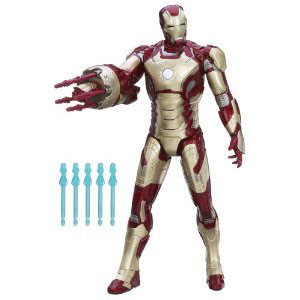
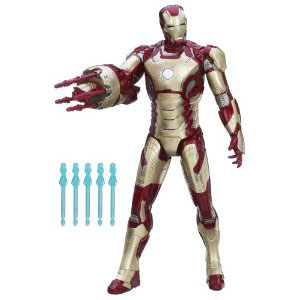
Animated Figures – From Star Wars to Batman, these  figurines reign supreme. Power Rangers, Superman,  and DC Comics characters are also in this category.  And just because you have one Darth Vader doesn’t  mean that you are done. Newer and better Darth  Vader action figures  arrive on the shelves every  day, and children’s TV shows are only too happy to  introduce them to your kids.

Anime Figures – The big sellers here are Dragonball  Z and Yu-Gi-Oh. Those two names alone can cause a  room full of young boys to faint. Each individual  in the series has an entire collection of action  figures, so one is never enough.

Bobbleheads – Toy figurines in this category range  from basketball stars to Betty Boop. What sets them  apart is the bouncy movement of their heads. Many  people place these figurines on their dashboard, so  the toy figurines move as the car bounces along the  road.

Movie Toy Figurines – You’ll find the full  complement of monsters here, from Dracula to  Wolfman, along with crossovers from other  categories like Star Wars characters. If a movie is  popular with children, you can bet that a toy  figurine will follow. The success of Shrek and Nemo  toy figurines proves that point.  The recent success of the Toy Story and Transformer films has given rise to a huge business in the production of Transformer toys such as the Mechtech Megatron transformer to name but one from the collection of Transformer toys, not to mention the new KRE-O Transformer toys. Each Christmas, the Toy Story Buzz Lightyear toy peaks as one of the more popular toys to give as a gift to young children.

TV Toy Figurines – The toddler set will have hours  of fun playing with toy figurines from Sesame  Street and Blues Clues. As children age, their TV  universe expands, and middle schoolers will be  begging for Buffy the Vampire Slayer toy figurines,  while teenagers will be stalking the mall for the X  File’s Scully and Mulder.

Disney Toy Figurines – This group of toy figurines  is huge, as it encompasses all of the Disney  franchises, from Winnie the Pooh to Cruella  Deville. New toy figurines are released each year,  so people can collect vintage pieces like Dumbo and  Mary Poppins.

Animal Figurines – Do you like horses? There are  thousands of toy horse figurines from which to  choose. How about pigs, or donkeys, or even  penguins? These toy figurines are all available.  Children can build a toy farm and stock it with the  proper animals, or run a toy rodeo where horses can  be equipped with the latest gear.

Historical Figurines – Pick a century, and you will  find a toy figurine to fill it. Knights of the  Round Table, Cleopatra, and Helen of Troy are just  a few of the ancients who have been turned into toy  figurines. Children can recreate the Alamo, or lead  soldiers into battle against American Indians.

Military Figurines – These have always been popular  with kids, but with the advent of the Iraq war,  they are keeping a high profile. GI Joe stands next  to paratroopers and World War II German soldiers in  the toy aisle.

Sports Figurines – From Hulk Hogan in World Wide  Wrestling to NBA stars, little boys and little  girls have their sports heroes and now they can  have their sports hero action figures. Miniature  baseball players can move around imaginary bases,  while aspiring tennis and golf pros can own tiny  versions of their favorite players.

Whatever your choice of toy figurine, it is  available somewhere near your house or your  keyboard.

If you or your child really gets into toy figurine  collecting, there are conventions dedicated to  specific action figures or to pop culture, where  many unusual and hard-to-find toy figurines are  available.

Technorati Tags: action figures, buzz light year action hero, buzz lightyear pillow, Collect the Best Toy Figurines, transformer toy figures, transformer toys

Toys for Girls and Boys – An Article by the British Toy and Hobby Association
Toys are vital to your child’s development. The National Toy Council has prepared a series of leaflets Toys & Children to help parents to understand better issues relating to toys. This newly revised leaflet is designed to help in the selection of toys for girls and boys.

Why do boys and girls play differently and often prefer different toys? Someone said that if you gave footballs to 100 girls and dolls to 100 boys, within an hour the boys would be kicking the dolls and the girls would be nursing the footballs. Research shows that gender differences begin in early childhood.

SEX DIFFERENCES IN PLAY
Boys are usually more physically active than girls so boys prefer active, noisy play, and girls choose more social and passive forms of play. Boys are attracted by action and sound effects and making things happen, as in computer games. There is overlap, of course, with boys and girls sharing many play interests and activities – puppets, drawing, games, puzzles, wind-up animals, and modelling clay, to name a few.

Although boys and girls play differently they are alike in basic ways. Both need variety in their play – playing alone,
playing with others, playing quietly and playing actively. No single toy, or type of toy, can satisfy all a child’s
play needs. It is important for all children to experience a wide variety of play, and to be offered a range of
toys and play opportunities.

TOY PREFERENCES

Differences in the toy choices of boys and girls appear from as young as 9 months of age:

(1)  Many boys prefer male super-hero dolls and vehicles, while girls prefer baby dolls and toy household objects

(2) Girls are more flexible – they play happily with soft, cuddly toys, as well as with playing with dolls, chemistry sets, and video games.

(3) Boys are quicker to reject a toy that they consider a girl’s’ toy

WHAT MAKES THEM DIFFERENT?
Why do boys and girls play differently?
There are two basic explanations. The usual explanation is social: that sex differences are learned as part of
gender socialisation (learning the roles of males and females). Children are influenced by the adults, and
later by the other children, around them. From babyhood, adults give cars and other ‘boys toys’ to boys and dolls
to girls, thus teaching them which toys are ‘appropriate’ for them (4). Later these sex differences are further strengthened by the child’s friends and classmates. Toy manufacturers often package and advertise toys ‘for boys’ or ‘for girls’. So a pink toy chest with a Barbie doll design is seen as a girl’s toy.

The alternative explanation is biological. Recent research increasingly supports this. Even monkeys show sex differences in toy preferences similar to those in children – young males preferred balls and cars, while young females preferred dolls and a pot.
The young monkeys played equally with ‘neutral’ toys, a picture book and a stuffed dog (5).

Other biological factors like hormones are also important. In one study, girls with high levels of androgens were more likely than other girls to prefer ‘masculine’ toys (6). Males and females evolved with different styles of visual perception and colour sensitivity. This may explain why boys and girls prefer different different colours and why boys’ prefer active toys (7).

WHAT SHOULD I DO?
It is important to offer children – both boys and girls – a wide variety of toys and opportunities for play.

Toy buyers should not limit themselves by thinking that a particular toy is only for a boy or only for a girl.
Children need a variety of play experiences to develop fully.

Don’t worry about allowing boys to play with dolls or domestic toys; there is no evidence that toys influence a boy’s masculinity or result in feminine traits. Children use their imaginations with toys, any way, so you may
find boys slinging dolls at each other, while girls use action men to go on dates with Barbie.

To encourage boys and girls to play together, combine neutral toys such as teddies, toys for baking, games, mats for dancing, etc, with traditional boys’ and girls’ toys in play areas.

————————————————————————-

(1) Anne Campbell, et al., (2000). Infants’ visual preference for sex-congruent babies, children, toys and activities: A longitudinal study.
British Journal of Developmental Psychology, 18, 479-498.

(2) Anna Servin, Gunilla Bohlin, & Lisa Berlin. (1999). Sex differences in 1-, 3-, and 5-year-olds’toy choice in a structured play situation.
Scandinavian Journal of Psychology, 40, 43-48.

(3) Eileen Wood, Serge Desmarais, & Sara Gugula. (2002). The impact of parenting on gender stereotyped toy play of children. Sex Roles, 47, 39-49.

(4) A. Pomerleau, D. Bolduc, G. Malcuit, & L. Cossette. (1990). Pink or blue: Environmental gender stereotypes in the first two years of life. Sex Roles, 22, 359-367.

(5) Gerianne Alexander & Melissa Hines. (2002). Sex differences in response to children’s toys in nonhuman primates. Evolution & Human Behavior, 23, 467-479.

(6) M. Hines, & F. R. Kaufman. (1994.) Androgen and the development of human sex-typical behavior: Rough-and-tumble play and sex of preferred playmates in children with congenital adrenal hyperplasia.
Child Development, 65, 1042-1053.

(7) Gerianne Alexander. (2003). An evolutionary perspective of sex-typed toy preferences: Pink, blue, and the brain.
Archives of Sexual Behavior, 32 , 7-14

————————————————————————-

The National Toy Council is concerned with child welfare and promoting a sensible attitude towards toys and
play. Its members include representatives of the Child Accident Prevention Trust, British Toy & Hobby Association, National Association of Toy and Leisure Libraries, The Trading Standards Institute, BBC Children’s
Television, Kidscape, national press, academics, retailers and toy safety experts.

FOR FURTHER INFORMATION

BTHA, 80 Camberwell Road London SE5 0EG

Technorati Tags: do boys or girls play legos more often, girls toys, preferred toys of girls, toys for boys, toys for girls, why do boys and girls prefer different toys

It is always a challenge to find a proper and useful toy for your child. On the one hand a toy must be useful for the baby’s development, on the other- it must be harmless. To select a correct toy for the baby you know some of his or her peculiarities of thinking and behaviour at stages of his or her development. Let us help you to discover the interesting and beautiful world of baby toys for your child from the ages of 3-6 months old.

In the period of 6-9 month the agility of your baby develops and becomes more complicated. He or she is grabbling freely and even tries to stand up onto two legs. Simultaneously small hand mobility develops: little one tries not just to grip the object in his palm, but also take it with his or her fingers.

Formerly a baby got acquainted with his or her surrounding objects occasionally, now their actions are purposeful. Liberalisation of the little person’s horizon will depend on adults. It is a serious thing for you to show your baby how to play with various toys: how to bang a little drum, how to play the small piano and press the keys, how to handle and ring the ball. At this age babies still chew and play with the rattles and tweeters, but they are also interested in more compound toys like little cars and books with bright pictures (note, always buy books with thick cardboard for small children!).

This age is a special period of time for the parents. Expression “being all eyes” more precisely describes the given situation. Some parents try to restrain the moving activity of their children from considerations of safety or not having enough time to look after them. But you must protect your child only against that is really dangerous to them. Children must learn out from their mistakes.

At the 9 months old the child understands that he or she can play with two toys simultaneously. For example, if they beat one toy on another, a sound will appear (tinkling, rattling) and the child likes these kind of sounds. Now they can play with bricks and pyramidions. In the beginning the child will smash and destroy the built houses and castles, but with time he or she will try to build them on their own. There are special meccanos of flexible plastic for 7-9 month old babies. As a rule, these are open-ended rings, which are linked easily together (though children like to nibble them).

By now a child can play simple games with the adults like “clapping palms”, “cuckoo”, and “let’s fly” etc. Ask your baby to find this or that toy, asking “Where is the rabbit?” If your child does not understand or finds a difficulty in finding the toy, help him “See, the rabbit is here!”

Attention!

1) Toys must not be broken or cracked easily; these contain fine details, which can get into child’s mouth or nose.

2) Plush toys are given to the child only in case if they are easily cleaned.

3) When the child begins to open the surrounding world in his or her room, cover the sharp corners of the furniture with something soft, close up plug sockets, and clear the wires away from the floor.

4) When entering your child’s room, dear parents, do not forget that your child might be standing behind the door.

5) Look carefully after your child and what he or she plays with. Among their “toys” can be not only the safe Mother’s slipper, but crackling plastic sachet (your child certainly will want to try it on).

Any baby store can offer you a wide range of toys, but, dear

parents please see carefully what toys you buy your little one, as not all are good and safe for them.

Angela Minster

http://www.articlesbase.com/home-and-family-articles/what-is-the-better-choice-of-the-toys-for-a-baby-in-the-period-of-69-months-old-106758.html

© 2007 First Baby Shop. This article may be used by anyone, anywhere as long as the author’s bio and links are included.

Technorati Tags: Baby Educational Toys, Baby Toys, baby toys for 6 month old, baby toys for 8 month old, toys for 6 month old, toys for 8 month old, toys for 9 month old